Kinetoplastid
Flagellated protists with a distinctive DNA-containing kinetoplast organelle.
Kinetoplastids are flagellated protists in the phylum Euglenozoa. Their name comes from a distinctive organelle called the kinetoplast, a dense granule packed with DNA. This group includes both parasites that cause serious diseases in humans and animals, and free-living species found in soil and water. They are often called kinetoplastids or kinetoplasts.
The group was first defined in 1963 by Bronislaw M. Honigberg. Traditionally, kinetoplastids are split into two families: the biflagellate Bodonidae and the uniflagellate Trypanosomatidae. The Bodonidae appear to be paraphyletic to the Trypanosomatidae. The trypanosomatid family is notable because it contains several genera that are exclusively parasitic. A typical genus is *Bodo*, which includes free-living species that feed on bacteria. Other genera include *Cryptobia* and the parasitic *Leishmania*.
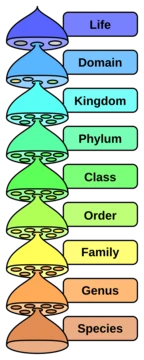
Taxonomically, Honigberg created the names Kinetoplastida and Kinetoplastea in 1963, but there is no consensus on their use. Kinetoplastea is more often used as a class, while Kinetoplastida usually designates an order, though it is also used as a class. Lynn Margulis initially accepted Kinetoplastida as an order in 1974 but later placed it as a class. Using Kinetoplastida as an order creates confusion because the older name Trypanosomatida (Kent, 1880) is more commonly used for the same group.
Kinetoplastida is divided into two subclasses: Metakinetoplastina and Prokinetoplastina. The classification includes several orders and families, such as Prokinetoplastida, Neobodonida, Parabodonida, Bodonida, and Trypanosomatida.
Morphologically, kinetoplastids are eukaryotic with normal organelles like a nucleus, mitochondrion, Golgi apparatus, and flagellum. They also have distinguishing features: the kinetoplast, a sub-pellicular microtubule array, and a paraflagellar rod. The kinetoplast is a dense DNA granule inside the single mitochondrion, containing many copies of the mitochondrial genome. It is made of a network of concatenated circular DNA molecules, structural proteins, and DNA and RNA polymerases. The kinetoplast sits at the base of the flagella and is linked to the flagellum’s basal body by a cytoskeletal structure.
The cytoskeleton is mainly microtubules, which form a regular sub-pellicular array running just under the cell surface along its long axis. Specialized rootlet microtubules are also prese
- classification
- Flagellated protists, phylum Euglenozoa
- defining feature
- Kinetoplast (dense DNA-containing granule in the mitochondrion)
- first defined
- 1963 by Bronislaw M. Honigberg
- traditional divisions
- Biflagellate Bodonidae and uniflagellate Trypanosomatidae
- notable parasitic genera
- Trypanosoma, Leishmania
- typical free-living genus
- Bodo
Lore & Background
The kinetoplastids were first defined by Bronislaw M. Honigberg in 1963 as members of the flagellated protozoans. They are traditionally divided into the biflagellate Bodonidae and uniflagellate Trypanosomatidae; the former appears to be paraphyletic to the latter. One family, the trypanosomatids, is notable as it includes several genera which are exclusively parasitic. Bodo is a typical genus within kinetoplastida, which also includes various common free-living species that feed on bacteria. Others include Cryptobia and the parasitic Leishmania.
Reader's Guide
Kinetoplastids are significant because they include major human and animal parasites, such as species of Trypanosoma (causing sleeping sickness and Chagas disease) and Leishmania (causing leishmaniasis). Their defining organelle, the kinetoplast, is a dense network of concatenated circular DNA molecules within the cell's single mitochondrion, located at the base of the flagella. The group's taxonomy remains unsettled: Honigberg created the names Kinetoplastida and Kinetoplastea in 1963, but there is no consensus on their rank, with Kinetoplastea more widely used as a class and Kinetoplastida as an order, though the latter also appears as a class. The order Trypanosomatida is exclusively parasitic, while other kinetoplastids are free-living in soil and water. Their cytoskeleton features a highly regular sub-pellicular microtubule array, and they possess one or two flagella used for locomotion and attachment. Some species, such as Trypanosoma brucei and Leishmania major, can undergo meiosis as part of a likely sexual cycle.
Did You Know?
- The kinetoplast is a dense DNA-containing granule within the cell's single mitochondrion, made up of a network of concatenated circular DNA molecules.
- Kinetoplastids are traditionally divided into biflagellate Bodonidae and uniflagellate Trypanosomatidae, with the former appearing paraphyletic to the latter.
- Diseases caused by members of the order Trypanosomatida include sleeping sickness, Chagas disease, and leishmaniasis.
- Trypanosoma brucei and Leishmania major are both capable of a meiotic process that is likely part of a sexual cycle.
More in Eukaryote Groups And Taxonomy 1-24
Elsewhere in the Eukaryote Groups And Taxonomy universe
Spotted an error? Know more?
This is a living reference — every entry is fact-audited, and reader corrections feed straight into our audit queue. Suggest an edit · See this site's audit record