Frequently Asked Questions
The most-asked questions about eukaryote groups and taxonomy.
What exactly is eukaryote taxonomy and what does this encyclopedia cover?
Eukaryote taxonomy is the system for classifying all organisms whose cells contain a membrane-bound nucleus and organelles, ranging from single-celled protists to plants, fungi, and animals. This encyclopedia focuses on the major supergroups, their internal diversity, and the ongoing debates about how best to organize them.
Who are the key figures in modern eukaryote classification?
Thomas Cavalier-Smith is widely credited with proposing the supergroup framework in the 1990s, while the Adl et al. consortium (2005, 2015) produced the most widely cited consensus classifications. More recently, phylogenomic researchers such as Shu-Lin Wu and Daniel Deyton have pushed revisions that continue to reshape the tree.
Where should a complete newcomer begin?
Start by learning the five or six current supergroups—Archaeplastida, SAR, Excavata, Amoebozoa, Opisthokonta, and sometimes Diaphoreticota—to get the big picture, then drill into whichever supergroup sparks your interest. Pairing an introductory protistology textbook with the Open Tree of Life visual browser gives you both narrative context and a living phylogenetic map.
What are the 'big five' supergroups and why do they matter?
Archaeplastida (plants and red/green algae), SAR (diatoms, ciliates, apicomplexans), Excavata (euglenids, trypanosomes), Amoebozoa (amoebae), and Opisthokonta (animals, fungi) together account for essentially all known eukaryotic diversity. They matter because each represents a deep evolutionary split, and understanding their relationships reveals how complex cell life diversified after the last eukaryotic common ancestor.
What is the last eukaryotic common ancestor (LECA)?
LECA is the hypothetical most recent organism from which all living eukaryotes descend, estimated to have existed roughly 2 to 2.5 billion years ago. It likely already possessed a nucleus, mitochondria or their remnants, a cytoskeleton, and endocytosis, making it far more complex than the universal common ancestor of all life.
Why do eukaryote classifications keep getting revised?
Each new wave of large-scale phylogenomic data can overturn relationships that were previously settled by morphology alone. Controversies over the placement of groups like Cryptomonoada (now often folded into Diaphoreticota) or the exact position of Apusomonadida show that the tree is still being actively redrawn.
What is a landmark moment in eukaryote taxonomy history?
The 1990s shift from a five-kingdom system to a multi-domain, supergroup-based framework was a seismic change, driven largely by Cavalier-Smith's proposals and early rRNA phylogenetics. The 2015 Adl et al. update, which formally recognized six supergroups and retired the old 'Kingdom Protista,' is often cited as the modern turning point.
How is eukaryote taxonomy different from bacterial or archaeal taxonomy?
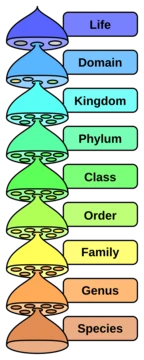
Eukaryotes are classified with a richer hierarchy—kingdom, phylum, class, order, family, genus, species—because their morphology and ecology are vastly more varied. Bacteria and archaea rely almost entirely on molecular phylogenetics and lack the same depth of structural diversity to encode in traditional ranks.
What are some surprising or 'fan-favorite' facts about eukaryotic diversity?
The parabasalid Cariopsina is so tiny it was mistaken for a bacterium for years, and some protists like Paulinella independently lost their chloroplasts multiple times. Apicomplexan parasites such as Plasmodium retain a reduced mitochondrion called an apicoplast, a vestige of a secondary endosymbiosis event.
Where can fans and newcomers keep up with the latest revisions?
The Journal of Eukaryotic Microbiology and the International Society of Protistology newsletter track major taxonomic changes as they are published. Online resources like the Open Tree of Life and the Protist Taxonomy Database provide continuously updated, phylogenetically informed classifications reflecting the most recent consensus.